

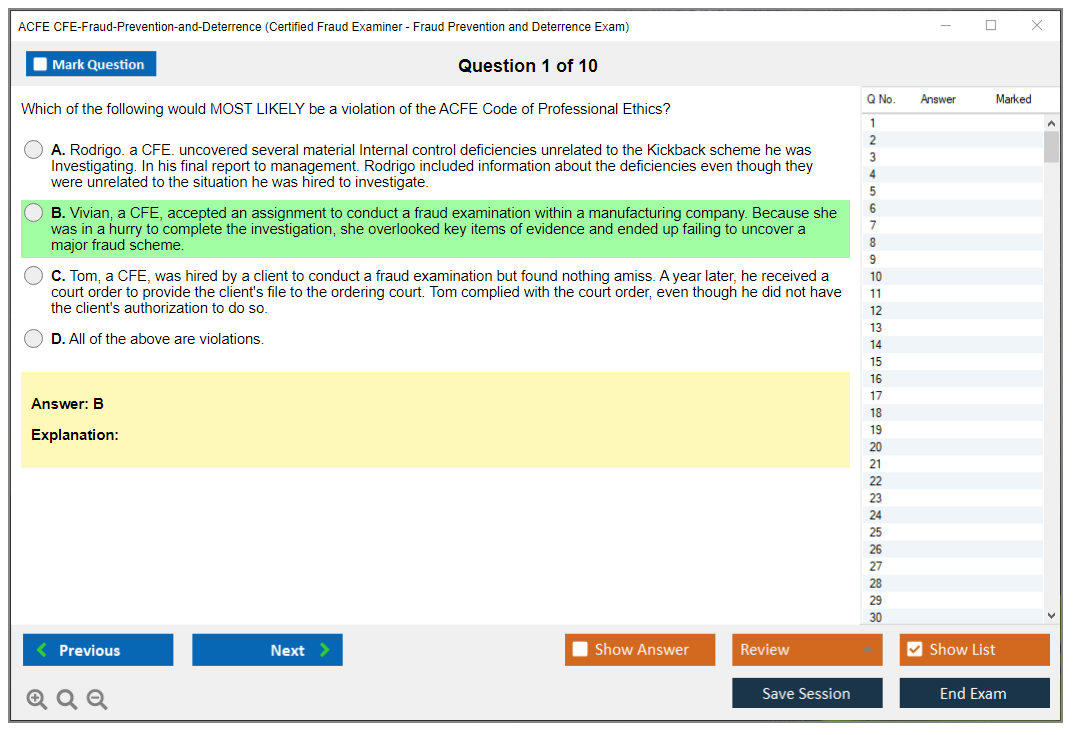
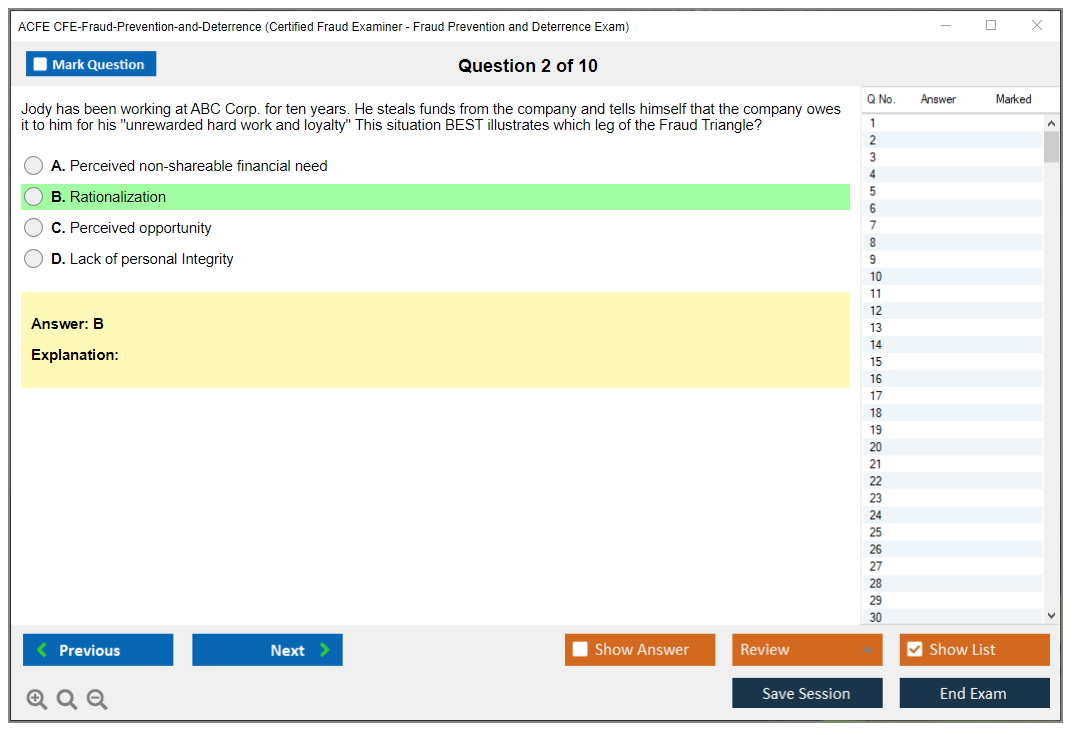
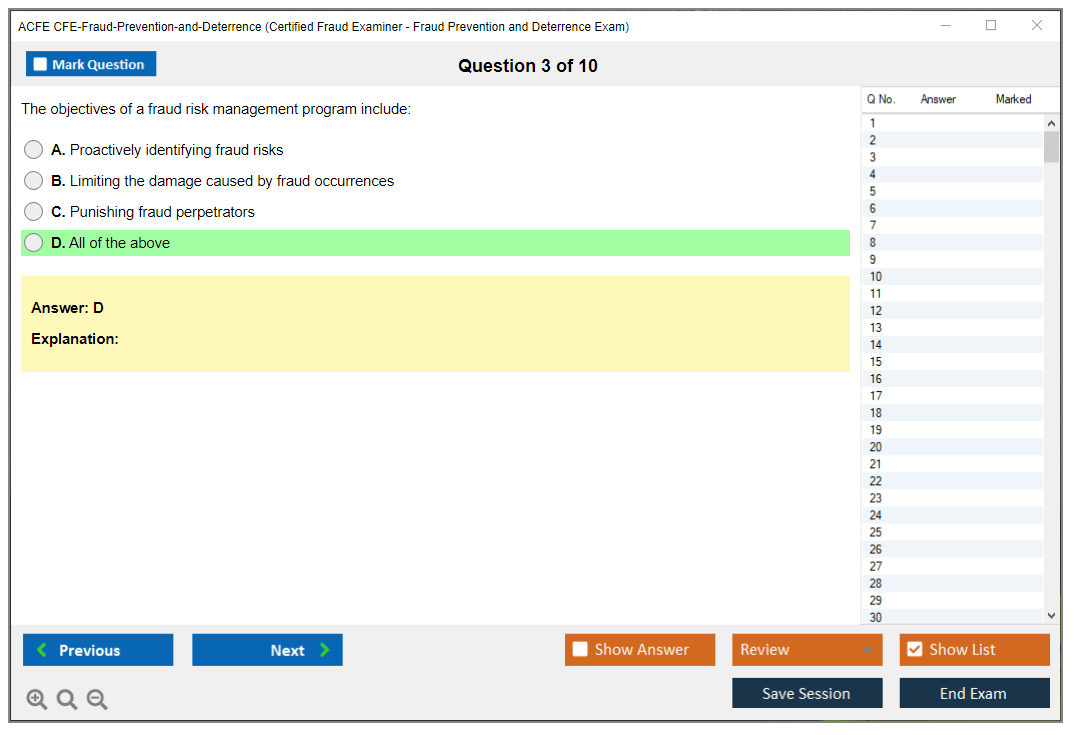
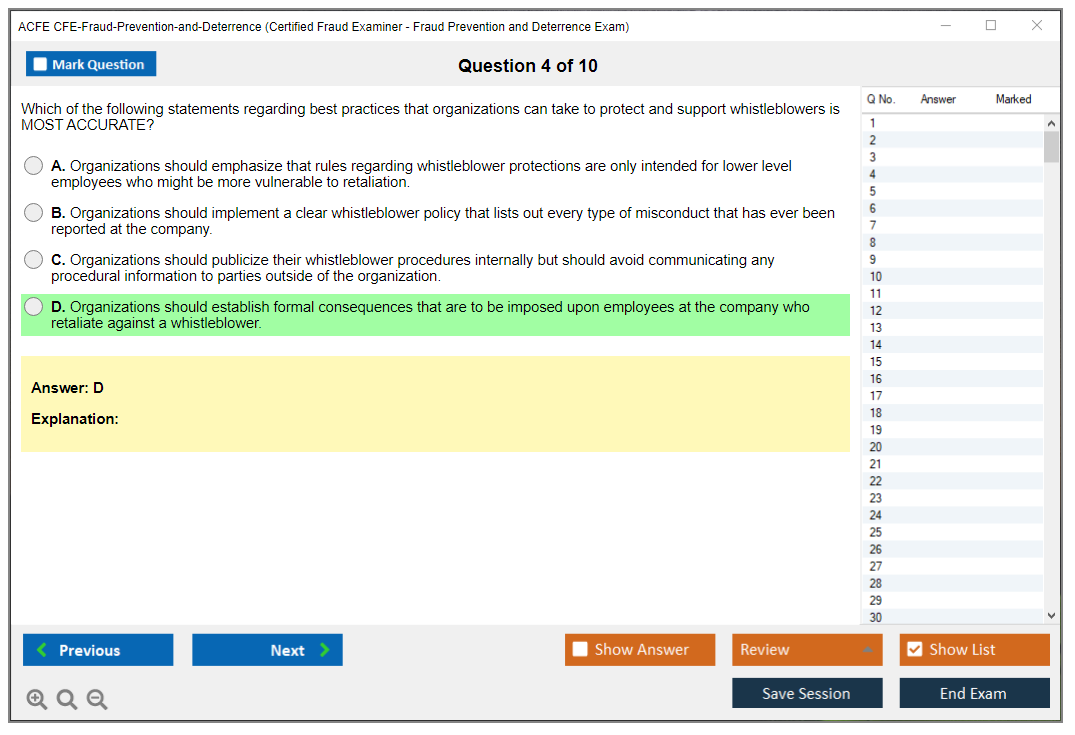
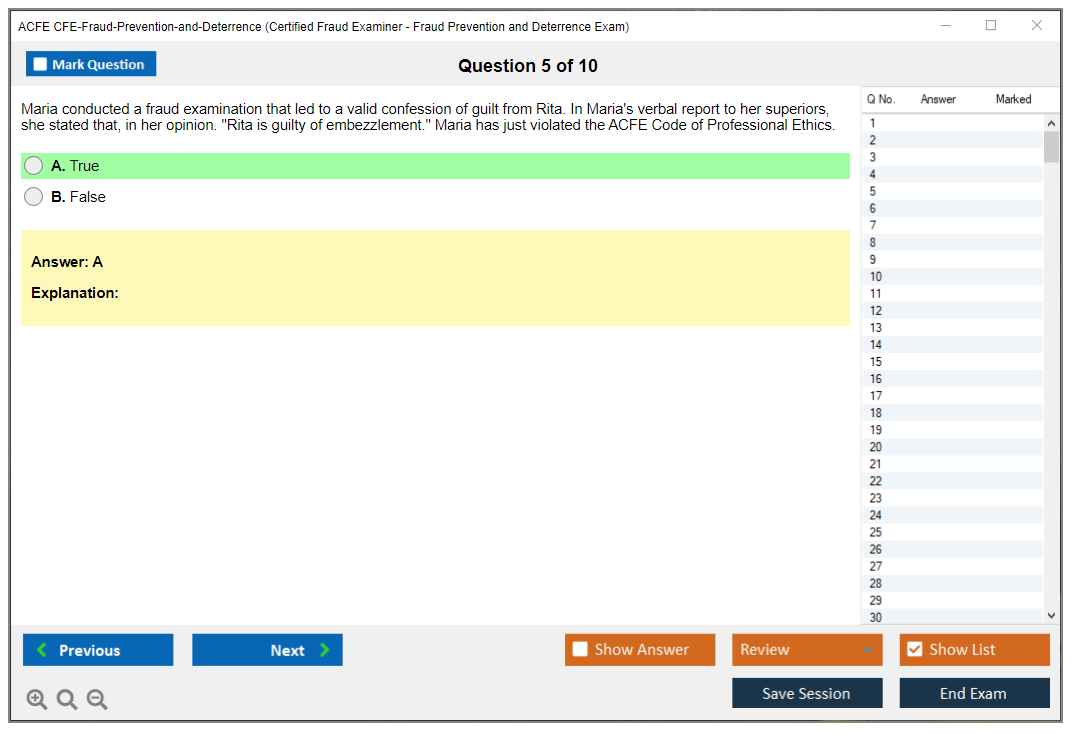
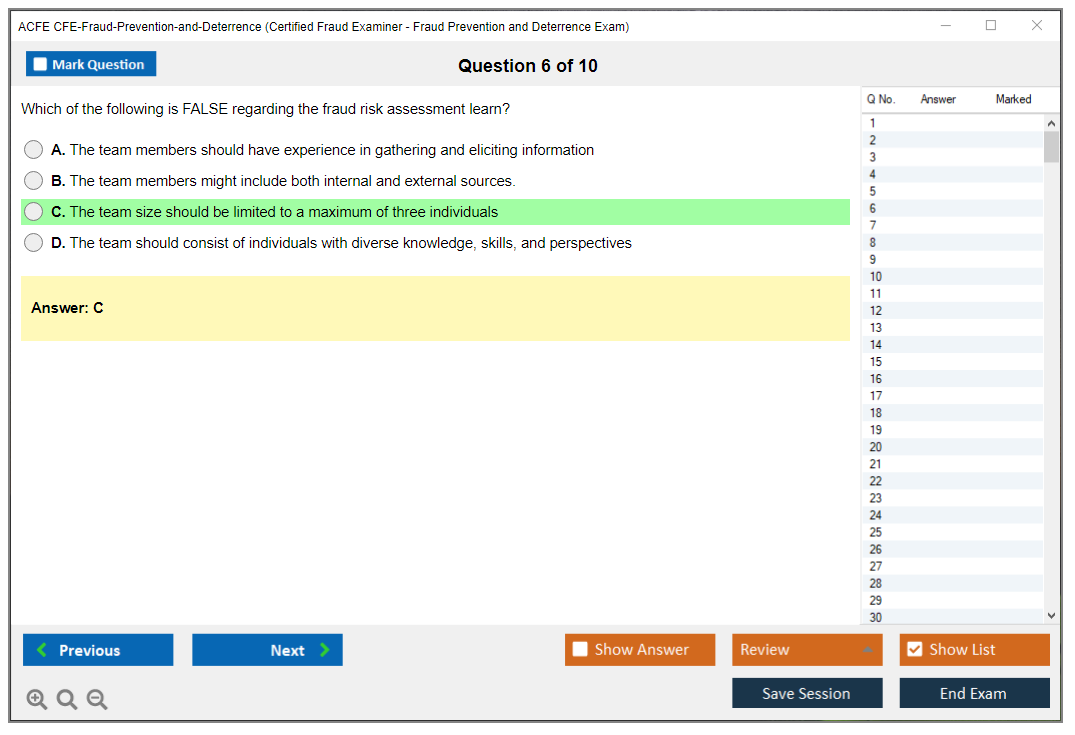
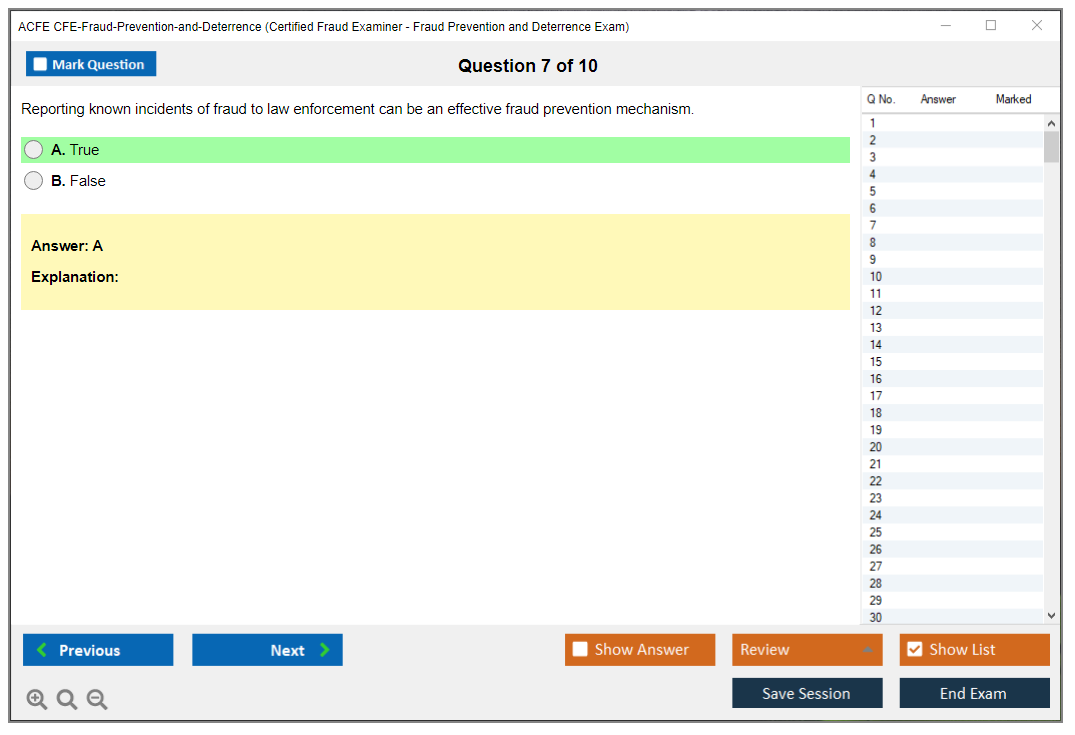
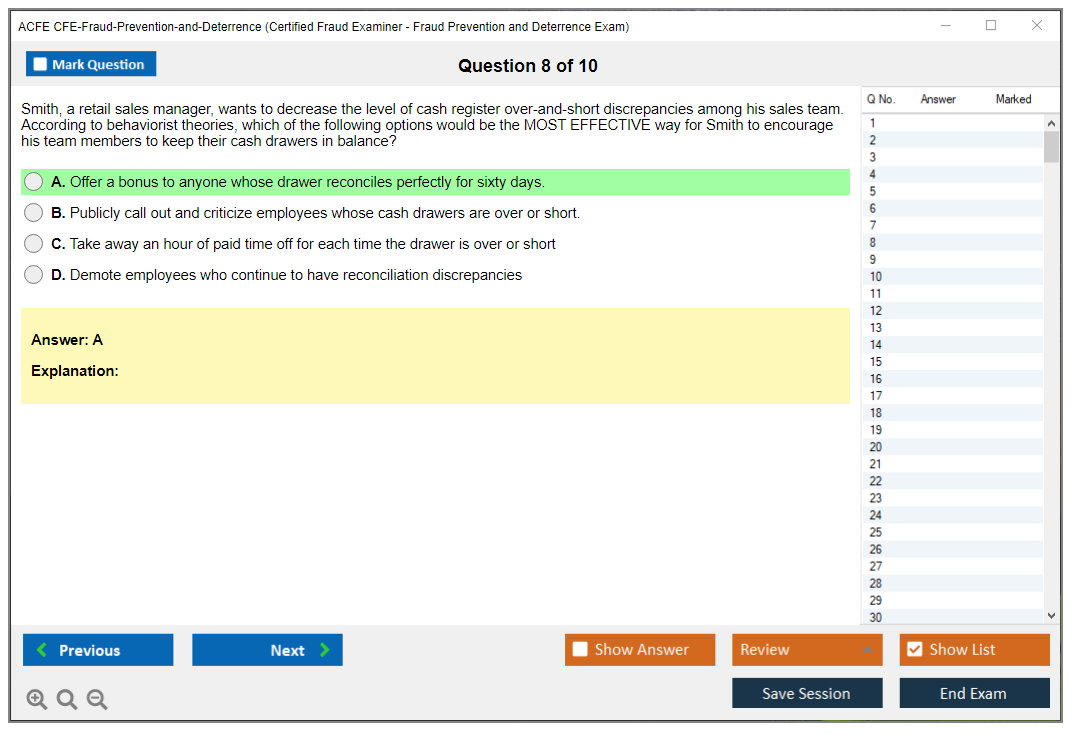
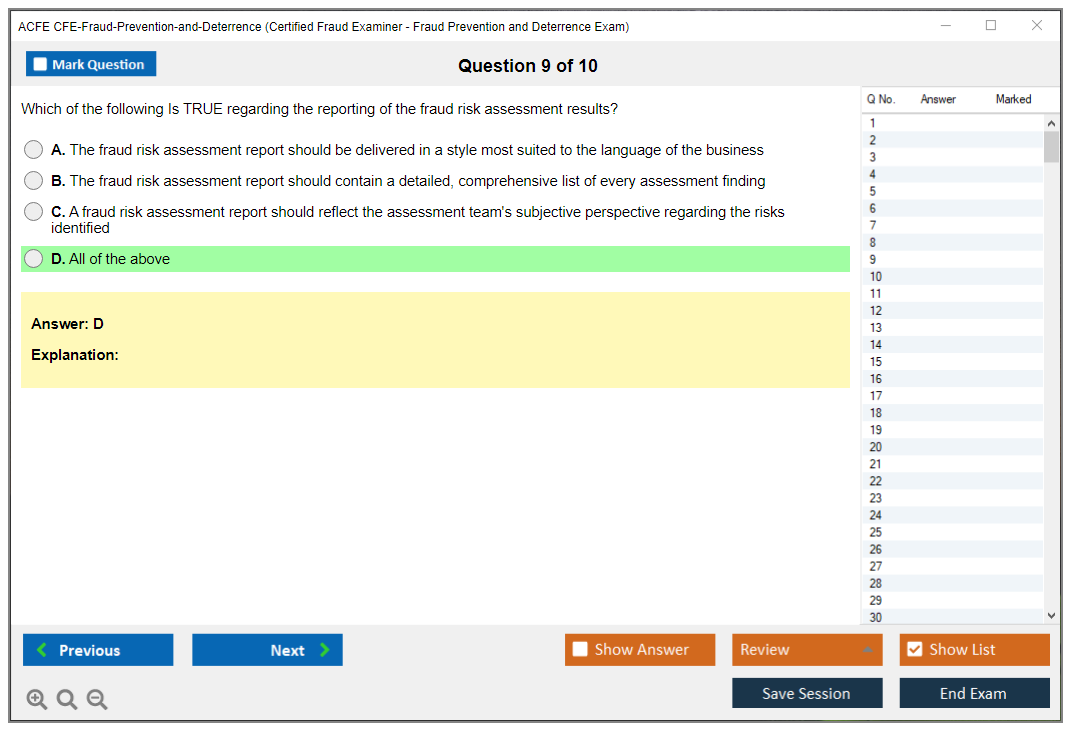
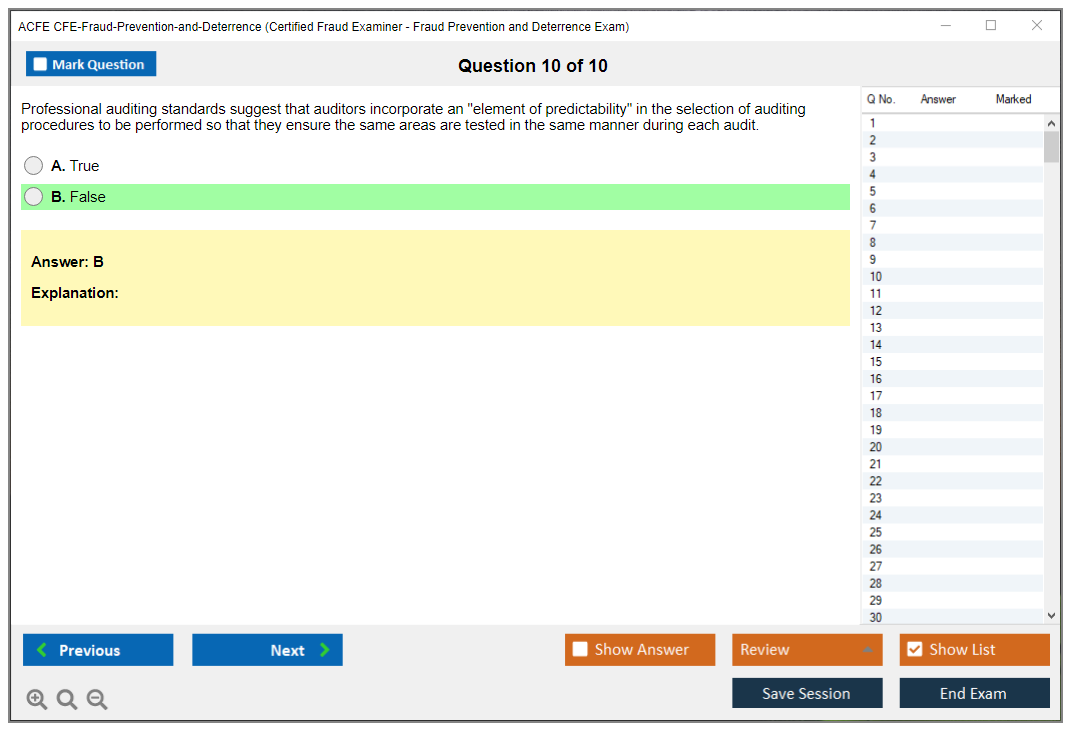
ACFE CFE-Fraud-Prevention-and-Deterrence (Certified Fraud Examiner - Fraud Prevention and Deterrence Exam)
ACFE CFE Fraud Prevention and Deterrence Exam Overview
The CFE credential is the gold standard for anti-fraud professionals worldwide. I mean, if you're serious about fraud examination, this certification matters. The ACFE administers four distinct exam sections that together create a full framework for fighting fraud: Financial Transactions and Fraud Schemes, Law, Investigation, and Fraud Prevention and Deterrence. Each section tests different competencies, but honestly, Fraud Prevention and Deterrence is where the strategic thinking happens.
What makes Fraud Prevention and Deterrence different from other CFE sections
Most people think fraud examination is all about investigating crimes after they happen. That's what the Investigation section covers. But Fraud Prevention and Deterrence flips the script entirely. You're learning how to stop fraud before it starts. This section focuses on proactive measures organizations implement to create environments where fraud struggles to take root. We're talking about designing anti-fraud programs, building ethical cultures, establishing controls that actually work in the real world.
The reactive investigation skills? Those matter. But this domain puts the spotlight on prevention, governance, and organizational frameworks. You need to understand how to assess fraud risk across an entire organization. Not just spot red flags. You're designing programs aligned with business objectives while managing compliance requirements and creating deterrence strategies that stick.
Core topics covered in the Fraud Prevention and Deterrence section
Fraud risk assessment methodologies form the foundation here. You'll need to know how to identify organizational vulnerabilities systematically, not just guess where problems might exist. This includes understanding different assessment frameworks. Conducting interviews with stakeholders. Analyzing process flows and documenting exposure points across departments.
Designing anti-fraud programs takes up significant exam real estate. This means understanding how to create policies that employees actually follow, not just documents that sit in SharePoint gathering digital dust. You're tested on aligning prevention initiatives with organizational objectives, securing executive buy-in, allocating resources, and building programs that scale. Honestly, it's challenging.
Internal control frameworks including COSO get heavy emphasis. The exam digs into preventive control mechanisms, detective controls, and how these fit together. You need to understand control design principles. Segregation of duties. Authorization protocols. Reconciliation procedures. Not gonna lie, the scenario questions here can get tricky because they present real organizational situations where you recommend specific controls.
Board oversight responsibilities matter. Corporate governance structures and their role in fraud deterrence come up repeatedly. Audit committee functions, management accountability frameworks, tone-at-the-top principles that actually influence behavior rather than just sounding good in annual reports. All tested. My former colleague used to joke that board members care about fraud prevention exactly as much as their legal counsel scares them into caring, which is cynical but not entirely wrong.
Creating environments where people choose to do the right thing even when nobody's watching gets tested heavily. Training programs and fraud awareness initiatives for employees at all levels matter here. You're tested on designing training that works, measuring its impact, and adapting programs for different audiences. The thing is, culture can't be faked.
Fraud reporting mechanisms including whistleblower hotlines and protection policies appear in multiple question contexts. You need to understand best practices for establishing confidential reporting channels, protecting reporters from retaliation, investigating reports without screwing it up, and communicating outcomes appropriately.
Compliance frameworks? Check. Regulatory requirements and policy development round out the major topics. This includes understanding how various regulations impact anti-fraud programs, developing policies that satisfy multiple requirements at once, and creating documentation that proves compliance during audits.
Who actually benefits from taking this exam
Internal auditors responsible for fraud risk assessments and control testing find this section directly applicable to daily work. Same goes for compliance officers developing and managing anti-fraud programs across organizations. Risk management professionals addressing fraud exposure need this knowledge foundation.
Corporate governance professionals and board advisory roles increasingly require fraud prevention expertise. Boards ask tough questions about fraud risk, and you need answers backed by recognized frameworks. Fraud examiners seeking credentials beyond investigation skills use this section to round out their expertise. I mean, it just makes sense for career growth.
Ethics and compliance managers building organizational integrity programs basically live in this content. Financial controllers implementing preventive controls find the frameworks immediately useful. Security professionals addressing fraud from an organizational perspective rather than just physical security discover new strategic approaches here.
Exam format and what to expect on test day
You're facing 125 multiple-choice questions covering fraud prevention topics within a 2-hour time limit. Time management matters. That's less than a minute per question, and some require reading scenarios, analyzing situations, and selecting the best response among plausible options. Pressure builds.
Computer-based testing happens at Prometric centers worldwide, with remote proctoring options available for qualified candidates. Questions range from definitional stuff you can knock out in 15 seconds to scenario-based application problems requiring genuine analysis. The exam puts weight on practical application rather than pure memorization. You can't just memorize definitions and expect to pass.
Scenarios often present organizational situations requiring control recommendations. You might read about a company with specific fraud vulnerabilities and need to select the most appropriate preventive measure. Or analyze a governance structure and identify its weaknesses. These application questions separate candidates who understand concepts from those who've truly internalized the material, which is honestly what you'd expect from a professional certification.
How this fits into the complete CFE certification
Fraud Prevention and Deterrence represents one of four required sections for CFE certification. You can take sections in any order alongside Financial Transactions and Law. All four must be passed within the established timeframe, but there's flexibility in scheduling.
Many candidates consider Fraud Prevention and Deterrence foundational for understanding organizational context. It works alongside investigation skills with a preventive perspective that changes how you think about fraud. Knowledge from this section applies across all fraud examination activities. Even when you're investigating, you're thinking about what controls failed and how to prevent recurrence. That shift? It's powerful.
Career impact and why organizations care
Organizations increasingly prioritize prevention over detection. It's cheaper, less disruptive, and protects reputation better. Regulatory environments demand solid anti-fraud programs, and examiners who understand compliance requirements bring immediate value. Board-level governance requires fraud risk expertise that goes beyond investigation. Directors want strategic advisors who can design enterprise-wide prevention strategies.
Real talk here. This certification demonstrates ability to think strategically about fraud risk across organizational levels. It separates candidates in compliance and risk management roles where everyone claims fraud expertise but few can design programs that work. The knowledge supports advancement into senior governance and advisory positions where you're shaping organizational culture rather than just responding to incidents.
Look, fraud prevention expertise validates your ability to create anti-fraud cultures that persist beyond individual personalities or temporary initiatives. That's what organizations actually need, and what this exam tests you on.
CFE Fraud Prevention and Deterrence Exam Objectives and Content Domains
ACFE CFE Fraud Prevention and Deterrence exam overview
The ACFE CFE Fraud Prevention and Deterrence exam tests whether you can actually stop fraud before it happens, identify control weaknesses, and build programs that function in real-world chaos. You know, the messy reality where nothing goes according to plan. Policies, controls, culture. Also reporting and response protocols.
ACFE publishes detailed content specifications for this section, and that blueprint becomes your roadmap for what's testable versus what's just background noise you don't need to obsess over. The exam objectives align with the ACFE CFE prep course Fraud Prevention and Deterrence module. Topics get refreshed periodically because fraud evolves constantly, technology changes even faster, and regulators keep introducing new expectations right when everyone's already drowning in compliance work. Weighting matters. Some objectives appear more frequently because they're common in daily fraud risk work, not because they're the most intellectually stimulating.
What the Fraud Prevention and Deterrence section covers
This domain is fraud risk management and controls with professional rigor baked in. You're expected to understand how organizations assess exposure, design anti-fraud programs and compliance structures, implement internal controls and fraud prevention measures, support corporate governance and ethical frameworks, run reporting mechanisms like hotlines, and then measure whether any of it actually delivers results.
Scenario thinking shows up constantly. Gray areas everywhere. "What would you do next?" questions that make you second-guess yourself.
Who should take this exam (roles and use cases)
If you're in audit, compliance, investigations, finance, or security, this section reads like your job description on a functional day. Internal auditors benefit heavily. Compliance managers too. Risk professionals. Also anyone who gets suddenly pulled into "we need a hotline process yesterday" situations because something catastrophic just happened.
Exam objectives (Fraud Prevention and Deterrence)
ACFE's ACFE CFE exam objectives Fraud Prevention and Deterrence provide a complete content blueprint of what you need to master. Not vibes. Not purely theoretical frameworks. It's anchored to professional practice frequency and real-world importance, and the updated standards component matters because what counted as "good enough" anti-fraud controls a decade ago isn't what regulators and boards expect today.
Below is how the domain breaks down in practical terms, aligned to what you'll encounter in a solid CFE Fraud Prevention and Deterrence study guide.
Fraud risk assessment and identifying exposure
Fraud risk assessment is foundational. Period.
You need to know how to conduct assessments across business units, processes, and geographic locations, then identify inherent versus residual risk after controls are factored in. Don't just memorize definitions. Expect questions where a control exists but operates weakly, or where a risk is "low likelihood, catastrophically high impact," and you still have to prioritize it correctly based on organizational context.
ACFE expects you to know the fraud triangle and fraud diamond frameworks and how to apply them for risk analysis, not as trivia for cocktail parties. Pressure, opportunity, rationalization. Then capability in the diamond model expansion. Also: culture. Ethical climate. Control environment strength. These are risk factors, and they're testable because they drive opportunity and rationalization in actual organizations operating under real constraints.
You'll also see industry-specific vulnerabilities, sector trends, and how to document and communicate results to stakeholders. I mean, executives don't want fifty-page reports. Integration with enterprise risk management matters. Updates matter too. Mergers, new systems, layoffs, new third parties, new compensation incentives. Classic triggers to refresh the assessment because the risk space just shifted.
Designing and implementing anti-fraud programs
This is where candidates lose points because they treat "anti-fraud program" like a compliance binder collecting dust on a shelf. The exam wants a living program: objectives aligned to business goals, policies and procedures that get followed, response plans, clearly defined roles, and board support that's genuine rather than performative.
Resource allocation shows up too, because you can't claim program effectiveness if your entire anti-fraud operation consists of one overworked analyst and zero budget.
Technology and data analytics are part of modern program design. Think monitoring dashboards, exception reporting, access reviews, and using data to detect anomalies that manual reviews would miss. Third-party and vendor protocols matter in practice, so expect questions about due diligence procedures, contract clauses, onboarding controls, and ongoing monitoring that actually happens rather than just existing in policy manuals.
If you only remember one thing: design the program to match organizational size, complexity, and risk profile. A small nonprofit and a global investment bank don't get the same control stack, and pretending otherwise is ridiculous.
Internal controls, preventive controls, and monitoring
COSO is huge here.
You need the components and how they map to fraud prevention: control environment, risk assessment, control activities, information and communication, monitoring activities. Then you apply them in scenarios. Preventive controls versus detective controls. Segregation of duties. Authorization protocols. Reconciliations. Verification procedures. Physical and logical access restrictions. Approval hierarchies and dual control mechanisms.
One topic worth extra attention is limitations of internal controls. This trips people up constantly. Humans override controls. Collusion exists. Management can bypass everything. Cost-benefit is real. The exam likes to test that you understand controls reduce risk, they don't eliminate it, and operational efficiency has to be balanced with control strength because you can't make every transaction require seventeen approvals.
Documentation matters: control matrices, procedure write-ups, and testing design versus operating effectiveness. That last part trips people up because it's easy to confuse "control exists on paper" with "control works consistently in practice."
Governance, ethics, and organizational culture
Corporate governance and ethics isn't fluff.
Board oversight responsibilities for fraud risk are testable, and so is tone at the top. The thing is, tone at the top actually drives behavior downstream. Codes of conduct. Ethics policies. Conflict of interest disclosures. Fiduciary duties. Accountability mechanisms.
Here's the messy part the exam hints at: ethical dilemmas and gray areas that don't have clean answers. Gifts and entertainment. Side gigs. Vendor relationships where your cousin works. Pressure to hit quarterly targets when you're three percent short. You need to know how organizations set expectations, measure ethical climate through surveys and observations, and respond when violations happen. Consistency is deterrence. Selective enforcement is an invitation to more fraud.
Fraud reporting mechanisms (hotlines) and response planning
Hotlines and reporting systems are core infrastructure. Design considerations include confidentiality and anonymity protections, anti-retaliation safeguards that actually work, awareness campaigns so people use the channel instead of staying silent, and multiple reporting options for accessibility. Phone, web portal, email, third-party provider, direct to compliance. Whatever fits your workforce.
Triage is a big concept that doesn't get enough attention. You don't investigate everything the same way, and you need protocols for intake, classification, escalation, and triggering investigation steps based on severity and credibility. Legal requirements for whistleblower protection can show up depending on jurisdiction, and hotline trend analysis feeds back into your fraud risk assessment. That feedback loop matters for program improvement.
Deterrence strategies, training, and awareness programs
Deterrence theory is simple: people are less likely to commit fraud when they believe they'll be caught and punished. Training supports that perception. Awareness supports that. Consequences communicated clearly supports that.
You'll want to know how to build training for different organizational levels, including role-specific training for high-risk positions like accounts payable, procurement, payroll, and sales compensation administrators. New hire orientation is a classic control touchpoint. Measuring training effectiveness matters too, because "everyone clicked next through the slides" isn't the same as knowledge retention or behavior change.
Also yes, publicizing fraud cases and disciplinary actions can be a powerful deterrent, but it has to be consistent with HR policies, legal constraints, and privacy boundaries.
Compliance considerations and policy frameworks
This area is where exam questions can feel like a random grab bag, but there's a pattern if you look: know the major frameworks and what they mean for program design. Sarbanes-Oxley expectations for public companies. Foreign Corrupt Practices Act anti-bribery controls. AML and sanctions screening basics if relevant to the organization's operations. Data privacy constraints when running monitoring and investigations, because GDPR and similar regulations limit what you can do.
SEC and regulator expectations around controls, reporting, and documentation.
The point isn't memorizing every statute word-for-word. It's understanding how compliance requirements shape policies, controls, monitoring approaches, and evidence handling.
Continuous improvement and program measurement
A program that never changes is a program that's falling behind. Fraud schemes evolve too quickly for static approaches. KPIs that actually matter. Loss metrics. Cost-benefit ratios that justify budget requests. Periodic assessments and audits. Stakeholder feedback loops. Benchmarking against peers. Lessons learned from incidents, which is where real improvement happens.
Continuous monitoring and analytics can show up here too as a way to detect emerging schemes and measure control effectiveness over time rather than at a single point. Reporting to management and the board is part of governance requirements. Improvement opportunities should be based on data and evidence, not office politics or whoever shouts loudest.
Cost and fees
CFE exam fees (what you pay for)
People ask: How much does the ACFE CFE Fraud Prevention and Deterrence exam cost? The cost usually isn't "just this section," because ACFE pricing is tied to the overall CFE exam process and whether you bundle prep materials together. Check ACFE's current fee schedule because it changes periodically, and because membership status affects what you pay.
Membership and prep materials costs to budget for
You'll likely budget for ACFE membership plus the prep course package if you want the official track. Add optional things like extra question banks or supplemental notes if you learn that way. Some people don't need extras. Others absolutely do. I spent maybe two hundred bucks beyond the basic package, mostly on coffee shop study sessions if we're being honest.
Retake fees and rescheduling considerations
Retakes can add up financially. Plan like an adult. If you're unsure about readiness, build more practice time before your first attempt rather than paying twice, which gets expensive fast.
Passing score and scoring
Passing score (what ACFE requires)
Another common one: CFE Fraud Prevention and Deterrence passing score. ACFE publishes passing requirements for the exam sections, and you should confirm the current threshold directly with ACFE since scoring policies can be updated periodically.
How the exam is scored and what "passing" means
Multiple-choice format, objective scoring, and you either meet the standard or you don't. No partial credit magic. Your job is to be consistent across the blueprint, not perfect in your single favorite topic.
What to do if you don't pass (retake policy overview)
Retake happens. It's not a character flaw or career-ending disaster. Use your score report, rebuild weak domains, then hit practice questions again with a timer to simulate exam conditions.
Difficulty: How hard Is Fraud Prevention and Deterrence?
Common challenging topics (controls, governance, program design)
People ask CFE Fraud Prevention and Deterrence exam difficulty because it feels broad. The hardest parts tend to be COSO application in scenarios, designing an end-to-end program from scratch, and governance questions where multiple answers sound "reasonable" but only one matches current best practice.
What makes candidates lose points (scenario questions, terminology)
Scenario questions cause trouble. Terminology confusion between similar concepts. Mixing up preventive versus detective controls. Also, treating documentation and monitoring as optional nice-to-haves. They're not.
Difficulty vs. the other CFE exam sections
Compared to pure investigation techniques or law content, this one is more organizational and systems-focused. If you've worked in audit or compliance, it often feels familiar. If you haven't, you'll need repetitions and practice.
Best study materials and practice tests
Official ACFE materials (CFE Exam Prep and manual)
For what study materials and practice tests are best for the ACFE CFE exam, start with the official prep course and manual because the objectives align tightly. Then layer supplements if you're weak in controls or governance concepts.
Practice tests and question banks
Use CFE Fraud Prevention and Deterrence practice questions with a timer running. Build an error log. Track why you missed it, not just what you missed. That's how you actually pass instead of just hoping.
Study plan to pass (1,6 Weeks)
If you're asking how to pass CFE Fraud Prevention and Deterrence, pick a timeframe that matches your professional background. One week is possible if you already do this work daily and can grind hard. Four weeks is the sweet spot for most people. Six weeks is for deeper mastery and more timed practice sets if you're new to internal controls and fraud program design.
FAQ (Fraud Prevention and Deterrence)
Is the CFE Fraud Prevention and Deterrence exam open book?
ACFE's exam rules can change, so verify in the candidate handbook. Don't assume anything.
How many questions are on the Fraud Prevention and Deterrence exam?
ACFE publishes the format details. Confirm the current number and time limit in the official guidance.
Can I take the CFE exam sections separately?
Yes, sections are typically taken separately within ACFE's rules, and that flexibility is a reason people finish while working full time.
CFE Fraud Prevention and Deterrence Exam Cost and Fees
How much does the ACFE CFE Fraud Prevention and Deterrence exam cost: Complete fee breakdown
Okay, here's the deal.
When I started researching the CFE exam, the whole pricing thing threw me for a loop. It's not exactly straightforward at first glance. The registration fee actually covers all four sections bundled together, not Fraud Prevention and Deterrence as some standalone thing you purchase separately. Makes way more sense from a financial planning perspective than if they nickel-and-dimed you for each individual section.
ACFE members? Different story. You're getting a reduced exam fee compared to non-members, which is how these professional organizations always work. The current member exam fee typically hovers around $300-$400 USD, give or take. Non-members pay roughly $100-$150 more than the member rate. So you're potentially looking at $400-$550 total if you haven't joined yet, though these fees shift around occasionally, so double-check current pricing on the ACFE website before you commit financially.
First-timers sometimes hit a one-time application fee. Not huge, but it exists. Your exam fee grants access to all four sections within your testing window (typically valid for one year from registration), which gives you solid breathing room. That means you could tackle CFE-Fraud-Prevention-and-Deterrence first, then move on to CFE-Investigation, CFE-Financial-Transactions-and-Fraud-Schemes, and CFE-Law in whatever sequence matches your learning style or professional background.
CFE exam fees: What your registration includes
So what's actually included?
Authorization to schedule all four CFE exam sections. Access to the official ACFE exam scheduling system comes standard, and your testing window typically stretches for one year from registration. Plenty of time if you're committed and not just casually browsing certification options.
The sections? Take them in any order at your own pace, which I really appreciate. Some people start with Fraud Prevention and Deterrence because the material feels more conceptual and theory-based. Others prefer diving headfirst into Financial Transactions because they've got accounting backgrounds. Official score reporting happens immediately upon completion of each section, so you'll know right away whether you passed or need to schedule a retake and hit the books harder.
After passing all four sections, you get a digital badge and the exam fee covers initial CFE credential processing. That's completely separate from your annual membership dues, which we'll break down shortly. I actually forgot to renew my membership once and got locked out of member resources for like three weeks until I sorted it out with their support team.
ACFE membership costs and benefits for exam candidates
Annual ACFE membership is mandatory for maintaining your CFE credential once you've actually earned it through passing all sections. Membership fees fluctuate by geographic region and membership tier, but standard membership typically costs $195-$250 USD annually. Students? There's a reduced rate for qualifying candidates, usually hovering around $60-$80. Solid discount.
The thing is, membership benefits include Fraud Magazine subscriptions, networking opportunities through local chapters, and resources that are legitimately useful rather than just filler content. Members receive discounts on exam fees and prep materials, which is where the financial calculation gets interesting. If you join as a member before registering for the exam, you save $100-$150 on the exam fee itself, essentially covering your first year of membership through that discount alone.
Here's where it gets nuanced: membership is required before credential issuance, but not necessarily during exam preparation or the studying phase. Some candidates study independently first, pass all four sections, then join afterward. But honestly? Consider membership timing strategically to maximize value during your study period, because those member discounts on prep materials compound quickly and can save you several hundred dollars across multiple purchases.
CFE exam prep materials costs to budget for
The CFE Exam Prep Course (the official ACFE material) typically runs $349-$495 depending on sales and bundling. You can purchase individual section prep courses at reduced cost if you specifically need help with just Fraud Prevention and Deterrence. The Fraud Examiners Manual comes included with the prep course or you can buy it separately for around $200, which seems steep for one manual but it's full.
Third-party study guides and supplemental books? $50-$150 range. Practice question banks and test simulators hit $99-$299, depending on features and question volume. I mean, flashcard sets and basic study aids are cheaper at $20-$75, but they're definitely not full enough to rely on exclusively.
Live or online review courses can run $500-$1,500. Crazy expensive in my opinion, but some people absolutely swear by them and claim they're worth every penny. Total study material investment typically lands around $400-$800 for full preparation covering all bases. I personally spent around $600 and felt reasonably well-prepared, though your experience may vary based on your background and learning preferences. A solid CFE-Fraud-Prevention-and-Deterrence Practice Exam Questions Pack runs $36.99, which is honestly one of the better value propositions available if you're trying to gauge readiness without completely draining your wallet.
Retake fees and rescheduling considerations
Failed sections? Retakable. For an additional fee, obviously. The retake fee per section typically runs $50-$100, which isn't catastrophic but definitely compounds if you fail multiple sections and need several retake attempts.
Rescheduling fees exist. If you need to change your exam appointment, these fees fluctuate based on notice provided. Usually 24-48 hours is the cutoff. No-show results in complete forfeiture of your exam fee for that section, so just don't let that happen. Retake attempts may be capped within your testing window, and failed sections must be repassed before credential issuance, meaning the timeline extends if you don't pass everything on the first round.
Total investment for CFE Fraud Prevention and Deterrence certification
Let's crunch numbers. Initial exam registration and study materials will cost $700-$1,200 realistically. Annual membership for your first year adds another $195-$250 on top. Total first-year investment lands somewhere around $900-$1,450, which is a substantial chunk of change and not something to undertake casually without financial planning.
Subsequent years only require membership renewal and continuing professional education (CPE) compliance, so ongoing costs drop significantly after that initial investment year. The return on investment materializes through salary increases and career advancement opportunities. I've personally seen colleagues get $10k-$20k salary bumps after earning their CFE (Certified Fraud Examiner) credential, so the financial math actually works out favorably if you're committed long-term rather than just credential-collecting.
Employer reimbursement may offset costs substantially. Ask before assuming they won't cover it. Actually have the conversation with HR or your manager before you start spending your own money, because you might be surprised at what educational benefits already exist in your employment contract.
Cost-saving strategies for CFE exam candidates
Join ACFE as a member before registering. You'll save more than the membership costs through exam fee discounts alone. Purchase bundled prep materials rather than buying individual components separately. The ACFE offers package deals that consistently beat à la carte pricing.
Free resources exist. Use free ACFE resources and webinars, which aren't full enough to be your sole study method but they're legitimately free. Form study groups to share materials with other candidates preparing simultaneously. Request employer sponsorship or reimbursement upfront before you begin. Some organizations cover 100% of certification costs if you pass, though policies vary wildly.
Take advantage of student rates if you're currently eligible, even if you're finishing up a degree program. Most importantly? Pass all sections on your first attempt to completely avoid retake fees and the time cost of restudying material. That CFE-Fraud-Prevention-and-Deterrence Practice Exam Questions Pack for $36.99 might seem like an unnecessary extra expense when you're already spending hundreds, but it's exponentially cheaper than a $100 retake fee plus the opportunity cost and frustration of studying identical material again.
The bottom line?
Budget $1,000-$1,500 realistically for your first year, understand exactly what you're paying for at each step, and create a concrete plan to pass everything on the first attempt. The credential really pays for itself within a year or two if you're strategic about using it for career advancement rather than just letting it sit on your résumé collecting digital dust.
CFE Fraud Prevention and Deterrence Passing Score and Scoring System
ACFE CFE Fraud Prevention and Deterrence exam overview
The ACFE CFE Fraud Prevention and Deterrence exam feels different. More practical. Less like you're cramming vocabulary for a spelling bee and more like you're actually stepping into a company where the controls are duct-taped together, compliance is freaking out, and upper management wants solutions by Friday, even though it's already Thursday afternoon and nobody documented anything properly. Short name. Huge scope.
Honestly, a ton of candidates walk in thinking it's just common sense stuff. Terrible strategy. The thing is, this section trips people up hard on how ACFE words governance, internal controls and fraud prevention, and anti-fraud program and compliance expectations, especially when you hit those scenario questions where three answers seem perfectly reasonable but only one matches their exact logic.
What the Fraud Prevention and Deterrence section covers
You're getting tested on fraud risk management and controls, plus all the program-level infrastructure that actually makes prevention work in real organizations. We're talking risk assessments, control design, training programs, reporting channels, response planning, with corporate governance and ethics baked throughout. Policies count. Culture counts. Controls count.
One clarification. This isn't "how to investigate." It's "how to keep fraud from happening, catch it early when it does, and respond without creating a dumpster fire."
Who should take this exam (roles and use cases)
Internal audit teams. Compliance analysts. Risk professionals. Finance managers who somehow got roped into SOX testing duty. Also, literally anyone transitioning from straight accounting into fraud work, because this section directly mirrors what employers grill you about in interviews when they're trying to figure out if you actually understand prevention versus just knowing how to trace invoices. Hiring managers obsess over "prevention."
I remember watching a colleague bomb an interview because she kept pivoting to investigative techniques every time they asked about control design. Didn't matter that she could spot a fictitious vendor scheme from three states away. They wanted someone who could build the fence, not just catch people climbing over it.
Exam objectives (Fraud Prevention and Deterrence)
ACFE publishes the ACFE CFE exam objectives Fraud Prevention and Deterrence, and you need to treat that document like a battle plan, not marketing fluff.
- Fraud risk assessment and identifying exposure: allocate serious time here, because the exam loves asking what step comes first, what evidence justifies a particular risk rating, and how you document findings so executives can actually act on them without requiring a PhD to interpret your 90-page Excel monstrosity.
- Designing and implementing anti-fraud programs: expect questions on program components, who owns what, reporting structures, and how an anti-fraud program and compliance function actually operates when it's Monday morning and someone just found something weird.
- Internal controls, preventive controls, and monitoring: internal controls and fraud prevention concepts appear everywhere, and the sneaky part is distinguishing preventive versus detective versus corrective controls when they throw scenarios at you.
- Governance, ethics, and organizational culture: corporate governance and ethics isn't theoretical fluff in this exam. It's tested as a genuine deterrence mechanism, especially tone at the top and whether discipline gets applied consistently or just to people without executive protection.
- Fraud reporting mechanisms (hotlines) and response planning: confidentiality protocols, escalation paths, triage processes, and what you're supposed to do when the allegations involve someone three levels above you.
- Deterrence strategies, training, and awareness programs: fraud deterrence strategies plus communications, onboarding sequences, annual training cycles, and targeted training for roles where the temptation and opportunity overlap dangerously.
- Compliance considerations and policy frameworks: codes of conduct, conflicts of interest, gifts and entertainment policies, third-party risk frameworks, and how to write policies that people can actually follow instead of ignore.
- Continuous improvement and program measurement: metrics, audits, control testing cycles, and the "prove your program actually works" mindset that keeps you employed.
Cost and fees
CFE exam fees (what you pay for)
Your actual CFE Fraud Prevention and Deterrence exam cost depends on whether you're bundling fees through ACFE's system and which prep products you grab. ACFE's pricing shifts periodically, so I'm not dropping a number that'll be wrong in six months, but the pattern holds: membership, application fee, and exam prep costs stack up shockingly fast if you don't budget upfront.
Membership and prep materials costs to budget for
ACFE membership usually factors in, plus the official prep course or manual if that's your route. I mean, many candidates also grab a CFE Fraud Prevention and Deterrence study guide type resource or supplemental question banks because repetition is really what makes their weird phrasing finally click in your brain. Budget for practice. Not negotiable.
Retake fees and rescheduling considerations
Retakes cost money. Reschedules can too, depending on timing and whatever the testing vendor's rules are that week. Also, there's often a mandatory wait period before you can re-attempt a failed section, so don't build your timeline like you can just retake it Tuesday morning and check the box.
Passing score and scoring
Passing score (what ACFE requires)
Here's what everyone actually wants to know: the CFE Fraud Prevention and Deterrence passing score is 75% correct answers, which translates to 75 out of 100 points. Clean number. No ambiguity.
But here's the annoying part. ACFE treats each section independently. You must hit 75% on each of the four sections, and passing one section absolutely does not compensate for bombing another. So if you absolutely crush Investigations but miss Fraud Prevention by two questions, you've still got a problem to fix. Frustrating. Standard.
Also critical: all questions carry equal weight in the scoring calculation. No "bonus" questions. No extra credit for harder items. And there's no penalty for wrong answers, so when you're stuck between two choices and the clock's ticking, guess and move on.
How the exam is scored and what "passing" means
Even though the threshold is 75%, ACFE uses scaled scoring to ensure consistency across different exam versions. That's not some weird ACFE thing. Tons of certification bodies do it, because if one version happens to be slightly harder, they don't want candidates tested that day getting unfairly penalized for bad luck.
Computer-based testing usually gives immediate preliminary results the second you finish. That's the moment your entire brain shuts down and you just stare at the screen like it's about to tell you whether you wasted six months. Been there. Terrifying.
Behind the scenes, scoring algorithms apply statistical analysis for fairness, and questions get validated through psychometric analysis. Some exams include experimental questions that don't count toward your score, which is how test writers improve the question pool without compromising the credential standard. Scaled scoring accounts for difficulty variations between versions, then final scores go through a quality review process, and the official result gets posted in your ACFE candidate portal.
One detail that catches people off guard: your score typically shows as pass or fail, not a percentage, so you don't get a neat "you scored 82%" printout to frame.
What to do if you don't pass (retake policy overview)
First, breathe. Seriously. It happens to good people. Then dissect your score report and map it back to the objectives, because vague "I'll just study harder" plans accomplish nothing. Focus on weak spots like internal controls and fraud prevention distinctions, governance terminology, and program design sequencing, because those areas are where scenario questions quietly steal points without you noticing.
For prep, I like mixing approaches: official material for terminology alignment, plus a focused bank of CFE Fraud Prevention and Deterrence practice questions for timing and pattern recognition. If you want something targeted without overthinking it, the CFE-Fraud-Prevention-and-Deterrence Practice Exam Questions Pack runs $36.99 and works well as a "do 30 questions, review mistakes, repeat" tool, especially when you're rebuilding confidence after a miss.
Understanding scaled scoring and what "passing" means
Scaled scoring is ACFE's mechanism for making sure candidates tested on different dates face equal difficulty. It does not mean the test is curved against other people in your testing center. You versus the standard. Period.
That 75% threshold represents minimum competency. Not mastery. Not "you're amazing at this." It's basically ACFE saying you can apply fraud prevention knowledge practically: fraud risk assessments that actually make sense, anti-fraud program and compliance elements that hold up under scrutiny, and fraud deterrence strategies that aren't just motivational posters nobody reads.
Passing demonstrates readiness for professional CFE responsibilities, and the passing standard remains consistent across all administrations. Your score reflects performance relative to an established benchmark, not relative to whoever else happened to test that week.
Score reporting timeline and accessing your results
Preliminary pass or fail usually appears immediately after you submit. Official score reports typically become available within 24 to 48 hours through your ACFE online candidate account. Check the portal obsessively.
Don't expect question-by-question breakdowns. Most certification programs avoid that because it compromises question bank security. Passing scores get recorded in ACFE records, and failed attempts might show on your transcript until you pass that section, depending on how your candidacy displays.
Difficulty: how hard is Fraud Prevention and Deterrence?
ACFE doesn't publish section-specific pass rates, so anyone quoting numbers is completely guessing. In my experience, Fraud Prevention and Deterrence sits at moderate difficulty, but it punches way above its weight if you're used to pure memorization, because application questions are harder than definition questions and the scenarios demand judgment calls, not regurgitated facts.
Candidates lose points on wording details. They also lose points by overthinking scenarios. The "best" answer is the one aligned to ACFE's published objectives, not the one that sounds like what your boss would prefer or what worked at your last job.
Study time really matters. Adequate prep, around 60 to 80 hours for most people, correlates strongly with passing, especially if you're doing timed question sets and actually reviewing every miss instead of just moving on. If you want extra reps without reinventing your whole study plan, I'd slot in the CFE-Fraud-Prevention-and-Deterrence Practice Exam Questions Pack a couple weeks out, then again during final review, because the skill of choosing the "ACFE correct" option is honestly its own learnable skill.
Best study materials and practice tests
The official ACFE materials are your safe baseline because they match the language and structural patterns. Add supplemental reading if governance and controls aren't your daily job. Then do practice tests. This isn't optional. It's how you learn their question style.
For practice, build a timed routine, log every single miss, and write out why the right answer is right in your own words. That error log becomes gold during final review. If you're collecting extra question sets, the CFE-Fraud-Prevention-and-Deterrence Practice Exam Questions Pack is an easy add-on when you're exhausted from rereading chapters and just need more realistic multiple-choice reps.
FAQ (Fraud Prevention and Deterrence)
What is the passing score for the CFE Fraud Prevention and Deterrence exam?
75% correct. Think 75 out of 100 points, and you need 75% on each section independently.
How much does the ACFE CFE Fraud Prevention and Deterrence exam cost?
It varies based on membership status, application fees, and which prep products you buy. Plan a realistic budget because retakes and reschedules add cost fast.
How hard is the Fraud Prevention and Deterrence section of the CFE exam?
Moderate difficulty, with heavy scenario-based judgment calls. If you're strong in controls and governance concepts, it feels fair. If you only memorized definitions, it feels brutal.
What are the objectives covered in CFE Fraud Prevention and Deterrence?
Risk assessment, anti-fraud programs, internal controls and monitoring, governance and ethics, reporting and response mechanisms, deterrence training, compliance frameworks, and program measurement.
What study materials and practice tests are best for the ACFE CFE exam?
Start with official ACFE content, then layer in a CFE Fraud Prevention and Deterrence study guide approach plus targeted practice questions, timed sets, and maintain a detailed error log.
How Hard Is the CFE Fraud Prevention and Deterrence Exam: Difficulty Analysis
CFE Fraud Prevention and Deterrence exam difficulty: Overall assessment
Not gonna sugarcoat it.
The ACFE CFE Fraud Prevention and Deterrence exam occupies this weird middle territory where it's definitely challenging enough to respect, but it won't destroy you like some certification tests that feel designed to make grown professionals cry. Most folks I've chatted with who've gone through the CFE (Certified Fraud Examiner) sections peg this one at moderate difficulty, which honestly matches my take.
Here's what trips people up, though. This exam doesn't just want you regurgitating definitions or formulas like some robot. Sure, conceptual understanding matters, but the real challenge? Whether you can actually apply this stuff when things get messy. It's nowhere near as technical as the CFE-Financial-Transactions-and-Fraud-Schemes section (thank goodness, because those accounting details can make your brain hurt), but it demands way more strategic thinking.
You're making judgment calls about organizational realities. Designing programs that'll actually work in the real world. Considering how people behave when nobody's watching, or when everyone is.
Scenario-based questions really crank up the difficulty. Memorizing fraud triangle components? Easy part. But can you walk through a complicated situation where some mid-sized manufacturer has fraud vulnerabilities across three departments, limited budget, skeptical management, and figure out which controls actually make sense given all those constraints? That's really harder.
The difficulty feels calibrated for mid-career fraud professionals. People who've spent enough time in organizations to know that textbook solutions don't survive contact with actual corporate politics and budget battles. Entry-level candidates might find the practical judgment stuff tougher since they haven't lived through as many messy organizational situations.
But look, here's the upside. With solid preparation, this exam's totally beatable. I've watched people with structured study approaches come out feeling good, while others who figured they'd just rely on work experience got a reality check pretty fast.
Common challenging topics in Fraud Prevention and Deterrence
Corporate governance structures? Absolute point-killer for tons of candidates. Board oversight responsibilities, audit committee roles, all those governance layers. It's boring, filled with subtle distinctions, and the exam absolutely loves testing whether you truly understand who owns what responsibility. You'll face questions where the correct answer hinges entirely on knowing whether something's the board's job versus management's versus internal audit's domain.
Honestly, distinguishing between preventive and detective controls seems straightforward until you're knee-deep in a scenario where a control could reasonably be categorized either way. Preventive controls theoretically stop fraud before it occurs. Detective controls identify it afterward. Real-world controls often blur these boundaries, and the exam demands you classify them based on their primary function even when it's not crystal clear.
The COSO framework principles show up constantly. Not just "name the five components" softball questions, but actual application scenarios where you've got to figure out what's weak or missing in a described control environment. If you haven't really internalized how COSO functions beyond the definitions, I mean how it actually operates in practice, you're gonna have a rough time.
Whistleblower protection requirements contain all these jurisdiction-dependent details. The exam tests your understanding of which protections apply when. How to actually design reporting mechanisms employees will trust and use. What psychological factors make people willing to report versus stay silent. It's definitely not just "implement a hotline and call it done."
Designing appropriate controls for messy organizational situations forces you to weigh cost-benefit tradeoffs, cultural fit, resource limitations. A question might present a scenario and ask which control approach is most appropriate. Not which one's theoretically ideal, but which one actually works given that organization's specific reality.
Measuring fraud prevention program effectiveness gets surprisingly complex. How exactly do you measure something that didn't happen? The exam digs into metrics, leading indicators, assessment approaches that actually mean something.
Balancing control costs with risk mitigation benefits appears in questions where you're choosing between control options based on what's reasonable for that organization's risk appetite and budget constraints.
Understanding regulatory compliance across jurisdictions gets complicated fast, particularly for multinationals operating under different legal frameworks. Ethical dilemmas requiring judgment calls pop up throughout. Situations where there's no obviously "correct" answer, just better versus worse choices given the circumstances. Fraud risk assessment methodologies and prioritization frameworks also feature prominently.
I remember this one candidate who'd worked in internal audit for years and still got blindsided by the governance questions. She knew controls backward and forward but couldn't keep straight who reported to whom in different organizational structures. That's the kind of thing that sneaks up on you.
What makes candidates lose points: Common pitfalls
Confusing similar concepts absolutely murders scores. Preventive versus detective controls, fraud risk versus fraud indicators, governance versus management responsibilities. These distinctions really matter, and the exam's designed to punish any fuzziness in your understanding.
Scenario questions cause the most damage. You'll overlook some seemingly minor detail buried in the scenario that completely changes which answer's correct. Or you skim too quickly and miss that the company's actually a small nonprofit versus a publicly traded corporation, which fundamentally affects what controls are feasible or even required.
Huge pitfall here: selecting "ideal" answers instead of "best available" options. The exam constantly presents scenarios where the textbook perfect solution isn't remotely realistic, and you've got to pick what actually functions in that specific context with those specific constraints. If you're consistently choosing the most full, expensive, theoretically perfect control without considering practicality, you're bleeding points.
Misreading question stems destroys people, especially those "EXCEPT" questions where you're hunting for the one thing that doesn't fit the pattern. I've seen candidates who absolutely know the material inside and out select wrong answers because they didn't catch that the question was asking for the exception rather than the rule.
Insufficient familiarity with governance terminology means you're guessing on questions where someone with stronger vocabulary would recognize the answer immediately. Overthinking straightforward questions happens more than you'd think. Sometimes the obvious answer really is correct, but you second-guess yourself into picking something needlessly complicated.
Time management problems lead to rushed final questions where careless mistakes happen. Not reading all answer choices before committing means you grab the first reasonable-sounding option instead of identifying the best one.
And here's something I notice all the time: candidates applying their own workplace experience rather than ACFE best practices. Your organization might handle things differently, which is fine, but the exam wants the ACFE methodology. Period.
Weak understanding of control design principles becomes obvious when questions ask you to spot weaknesses in a described control structure or recommend specific improvements based on identified gaps.
Scenario-based questions and application challenges
Tons of questions present organizational situations demanding analysis. Like, "Company X has this industry, these specific fraud risks, this budget, this organizational culture..what's their best move?" You've got to identify appropriate fraud prevention responses based on the particular context they've described.
These scenarios test whether you can apply concepts in realistic contexts where nothing's neat and tidy. Real organizations operate with budget constraints, competing priorities, entrenched political dynamics, resistant personalities. The exam mirrors that organizational messiness.
The really tricky aspect? Scenarios often involve multiple defensible approaches, but you must identify the "best" option among several reasonable choices. This demands understanding organizational dynamics and constraints that textbooks don't always cover. What functions perfectly in a 50-person startup won't translate the same way to a 50,000-person global corporation with legacy systems and entrenched processes.
Practical judgment matters here. Way more than definitions.
You need to consider implementation realities. Change management challenges. How employees actually respond to monitoring and controls in practice rather than theory. That's what elevates this exam from moderate difficulty to really challenging for certain candidates.
If you've spent several years working in fraud prevention or internal audit, the scenarios will feel familiar and you'll have developed intuition about what approaches work. If you're relatively new or transitioning from a purely technical background, you'll definitely need extra time with practice scenarios to build that strategic judgment.
The CFE-Investigation and CFE-Law sections test completely different skill sets, but this Prevention and Deterrence section really wants to verify you can think strategically about building and sustaining anti-fraud programs over time. That's what makes it simultaneously challenging and absolutely passable. It rewards both dedicated study and hands-on practical experience in roughly equal measure.
Conclusion
Wrapping up your fraud prevention path
Okay, so here's the thing. The ACFE CFE Fraud Prevention and Deterrence exam? You can't just wing it on some random Tuesday afternoon and hope everything works out fine. This section really digs into whether you actually understand how to construct fraud risk management systems and controls that function in messy, real-world environments, not just theoretical concepts you crammed from some dusty textbook last month. You're working through anti-fraud program and compliance concepts, corporate governance and ethics frameworks, internal controls and fraud prevention measures that actual organizations stake their reputations on. It's hands-on.
Real talk?
The CFE Fraud Prevention and Deterrence exam difficulty catches people off-guard because scenarios dominate everything. Sure, you might've memorized the textbook definition of a fraud deterrence strategy perfectly, but when a question dumps a complicated governance mess in your lap with conflicting priorities and murky reporting lines, can you actually apply what you know? That's where candidates lose points. Big time. The ACFE CFE exam objectives Fraud Prevention and Deterrence section leans hard into program design, control implementation, and measuring whether stuff actually works. Which means you've gotta think like someone who's legitimately running an anti-fraud initiative day-to-day, not just someone passively studying one from the outside.
How you study? Matters way more than cramming endless hours.
A decent CFE Fraud Prevention and Deterrence study guide familiarizes you with content structure and topic flow, but you honestly need to hammer through CFE Fraud Prevention and Deterrence practice questions repeatedly. Until the format feels second-nature. Until pacing doesn't freak you out anymore. The CFE Fraud Prevention and Deterrence passing score sits at 75%, which sounds totally manageable until you're actually there, anxious, second-guessing scenario questions while the clock's ticking down. I mean, wait, let me back up. Knowing how to pass CFE Fraud Prevention and Deterrence ultimately boils down to repetition with quality practice material that challenges you properly.
Not gonna sugarcoat it.
The CFE Fraud Prevention and Deterrence exam cost represents a real investment in your professional credibility, and you definitely don't wanna throw that money away by showing up half-prepared or overconfident. Get your hands on diverse practice materials from multiple sources. Mix official ACFE resources with supplemental question banks that challenge you from different angles and expose gaps you didn't know existed. I once knew someone who studied exclusively from the official guide, thought they had it locked down, bombed the exam twice before finally branching out to other materials. Expensive lesson.
If you want practice questions that really mirror what you'll encounter on exam day, the CFE-Fraud-Prevention-and-Deterrence Practice Exam Questions Pack at /acfe-dumps/cfe-fraud-prevention-and-deterrence/ delivers that realistic preparation experience you actually need. You need serious reps with scenarios that force you to apply fraud prevention concepts under pressure, not just passively recall memorized definitions when prompted.
You've absolutely got this, but only if you commit to focused prep time using the right materials that actually work. Start drilling practice questions this week, seriously.

